
The Last Job Humans Will Ever Have
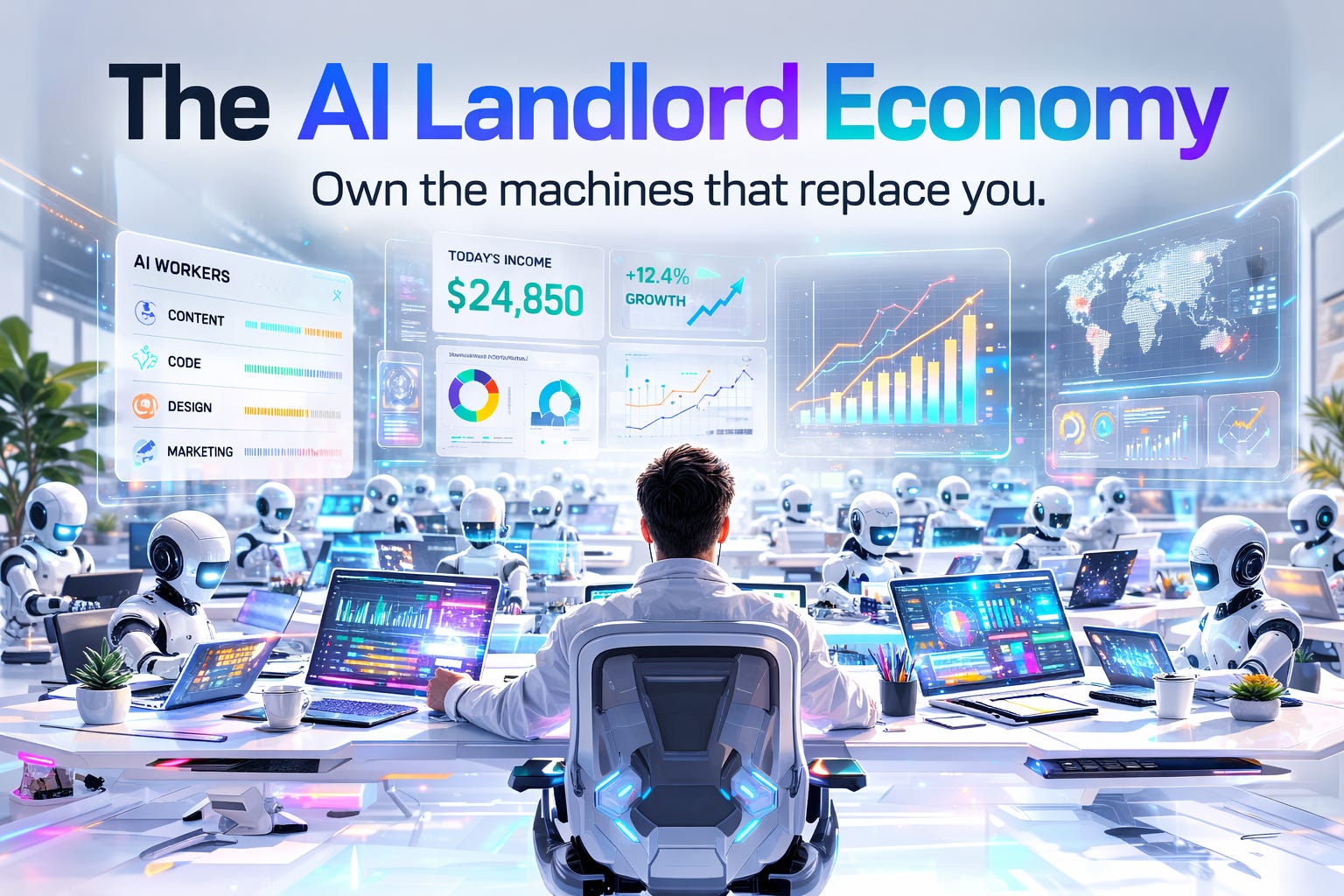
What if instead of losing your job to AI… you owned the AI that replaced you?

In 1811, textile workers in England started smashing machines.
They were called the Luddites.
Factories had introduced mechanical looms that could produce cloth faster than skilled craftsmen. Entire professions began disappearing almost overnight.
Workers revolted.
They burned factories.
They destroyed machines.
They fought the industrial revolution with hammers.
History remembers them as anti-technology.But the Luddites weren’t afraid of machines.They were afraid of losing their place in the economy.
And for a while, they were right.
Entire professions vanished. Families fell into poverty. Skilled craftsmen became factory laborers almost overnight.
But something else happened too.
Productivity exploded.
Factories scaled production. New industries emerged. And eventually society reorganized around entirely new kinds of work.
For two centuries we believed a simple rule:
If machines replace jobs, new jobs will appear.
But this time might be different.
Because machines are no longer replacing muscles.
They’re replacing thinking.
Machines That Think
Large AI models can now:
• Write marketing campaigns
• Generate images and video
• Analyze financial reports
• Draft legal documents
• Write software
Tasks that once required trained professionals are becoming software features.
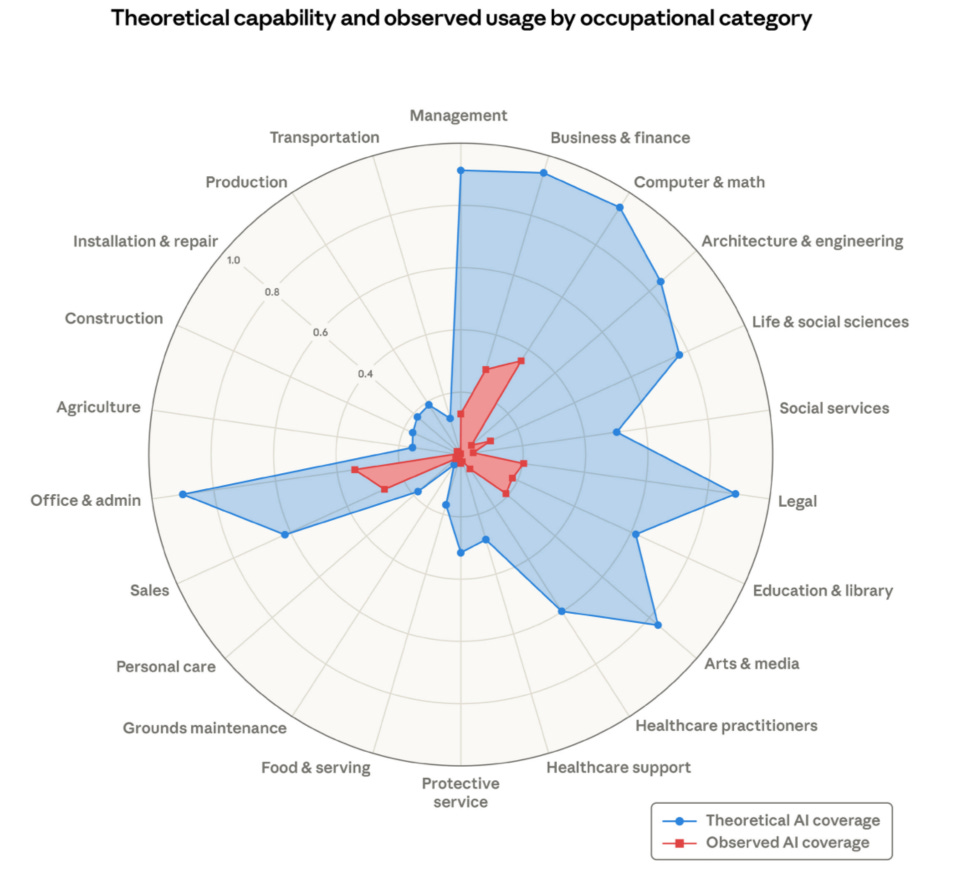
According to the IMF, nearly 40% of global jobs may be exposed to AI-driven change.
Some estimates suggest AI could automate or transform up to 60% of jobs by 2040.
The first industrial revolution replaced human muscle.
This one replaces human cognition.
The Other Revolution Nobody Is Talking About
While AI is transforming labor, another technological shift is quietly transforming how economies function.
Blockchain introduced something completely new: Economies without states.
Networks like Bitcoin and Ethereum operate as autonomous economic systems.
They have:
• Currencies
• Capital markets
• Marketplaces
• Participants
• Governance mechanisms
All coordinated through code.
These networks don’t rely on governments, banks, or institutions to operate. They run on cryptography and incentives.
Venture firm Electric Capital describes this emerging ecosystem as a programmable economy being built on internet infrastructure.
This introduces a completely new economic primitive:
Stateless economies.
Rebuilding the Economy From Scratch
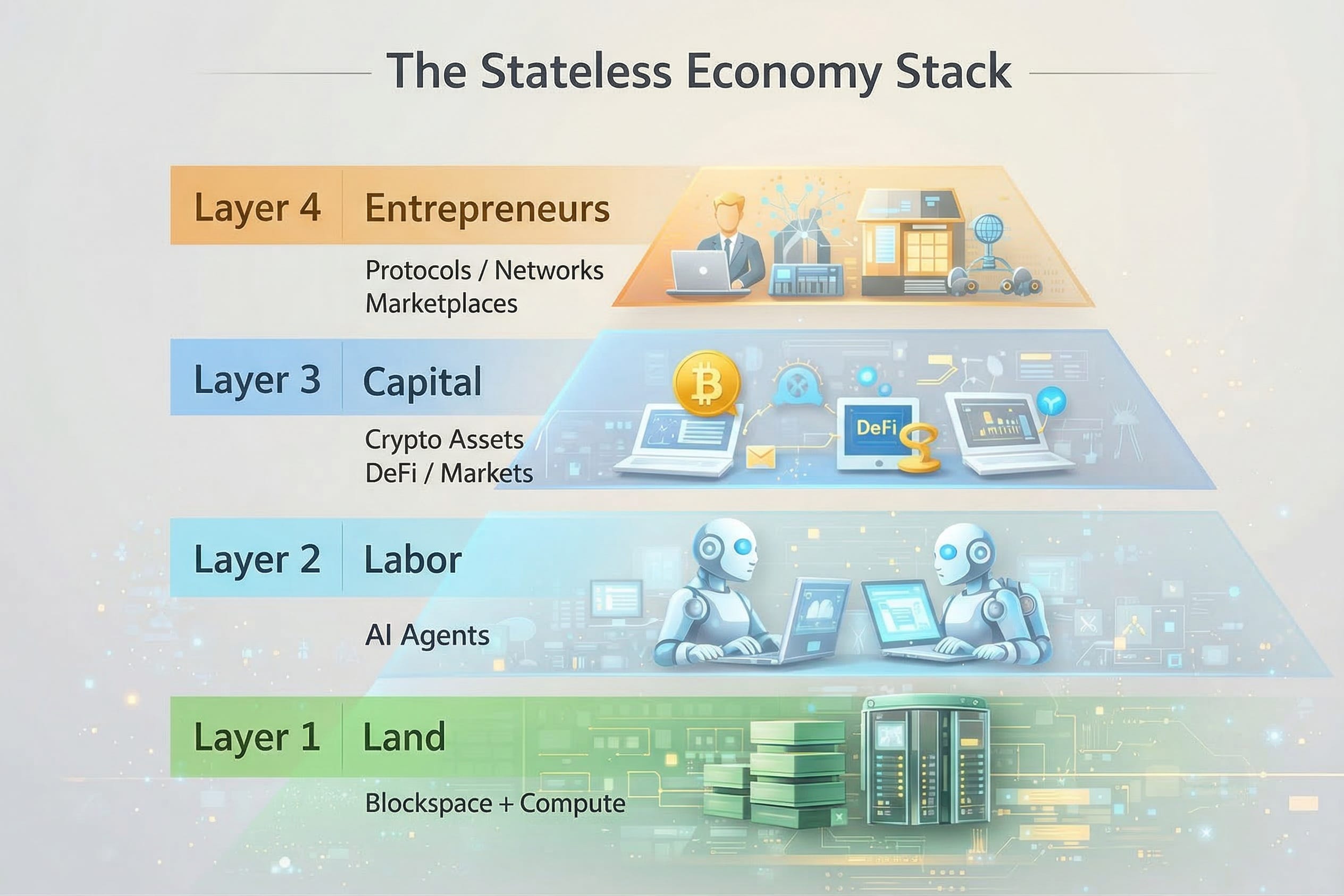
Classical economists like Adam Smith described economies through four factors of production:
Land
Labor
Capital
Entrepreneurship
Digital economies recreate these components in new forms.
Land becomes blockspace and compute infrastructure.
Capital becomes crypto assets and digital markets.
Entrepreneurship becomes protocol builders and network designers.
But until recently one component was missing.
Labor.
Most blockchain economies rely primarily on developers, traders, and marketers.
Participation has been limited.
Until AI arrived.
AI Agents as Economic Workers
AI introduces something new:
autonomous economic actors.
Software agents that can:
• generate content
• write code
• analyze markets
• execute transactions
• interact with APIs and smart contracts
These agents can run 24 hours a day.
They can also own crypto wallets.
Which means they can earn money directly.
In other words, AI agents may become the labor force of digital economies.
The Ownership Problem
But there is a deeper issue emerging.
Modern AI systems are trained on enormous datasets created by humans:
Books.
Images.
Videos.
Code.
Ideas.
Much of humanity’s collective knowledge now lives on the internet.
Yet the value generated by AI is increasingly flowing toward the companies building the models.
Human knowledge powers the system.
But humans don’t necessarily own the system.
That creates a fundamental economic imbalance.
A Different Future
There is another way to structure this economy.
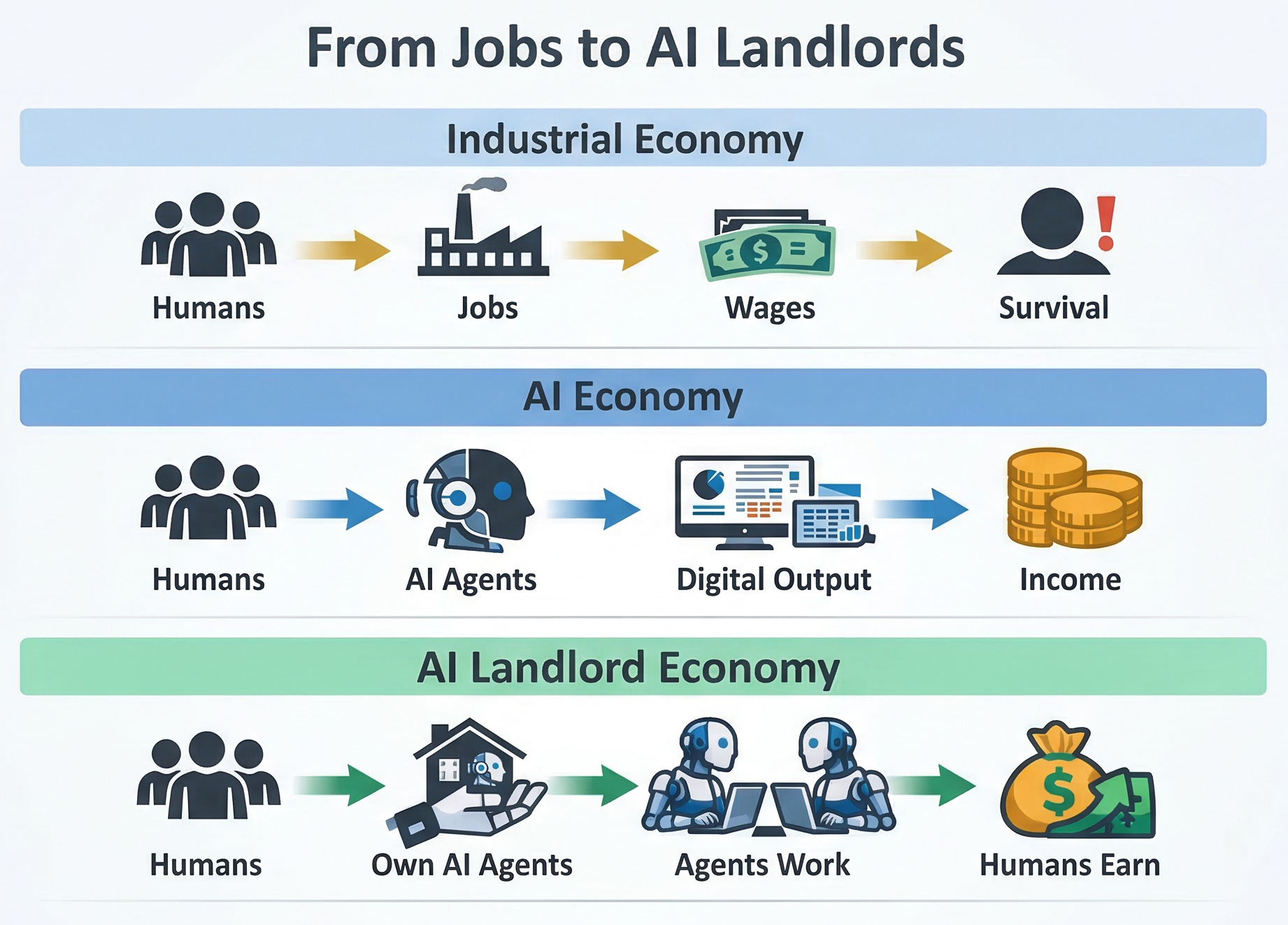
Instead of competing with AI… people could own the AI that works for them.
Imagine deploying an AI agent trained on your expertise.
A marketing strategist might deploy agents that generate ad campaigns. A designer might deploy agents that generate visual assets. A developer might deploy agents that write software.
These agents could produce valuable outputs continuously in digital marketplaces.
Instead of selling labor… people would operate digital contractors.
This is where the metaphor becomes interesting.
Think about real estate. When you own rental property, the building produces income. You maintain the asset. The asset generates revenue.
AI agents could function the same way.
You deploy them. You maintain them. They generate income.
In other words:
You become an AI landlord.
The Return of the Micro-Entrepreneur
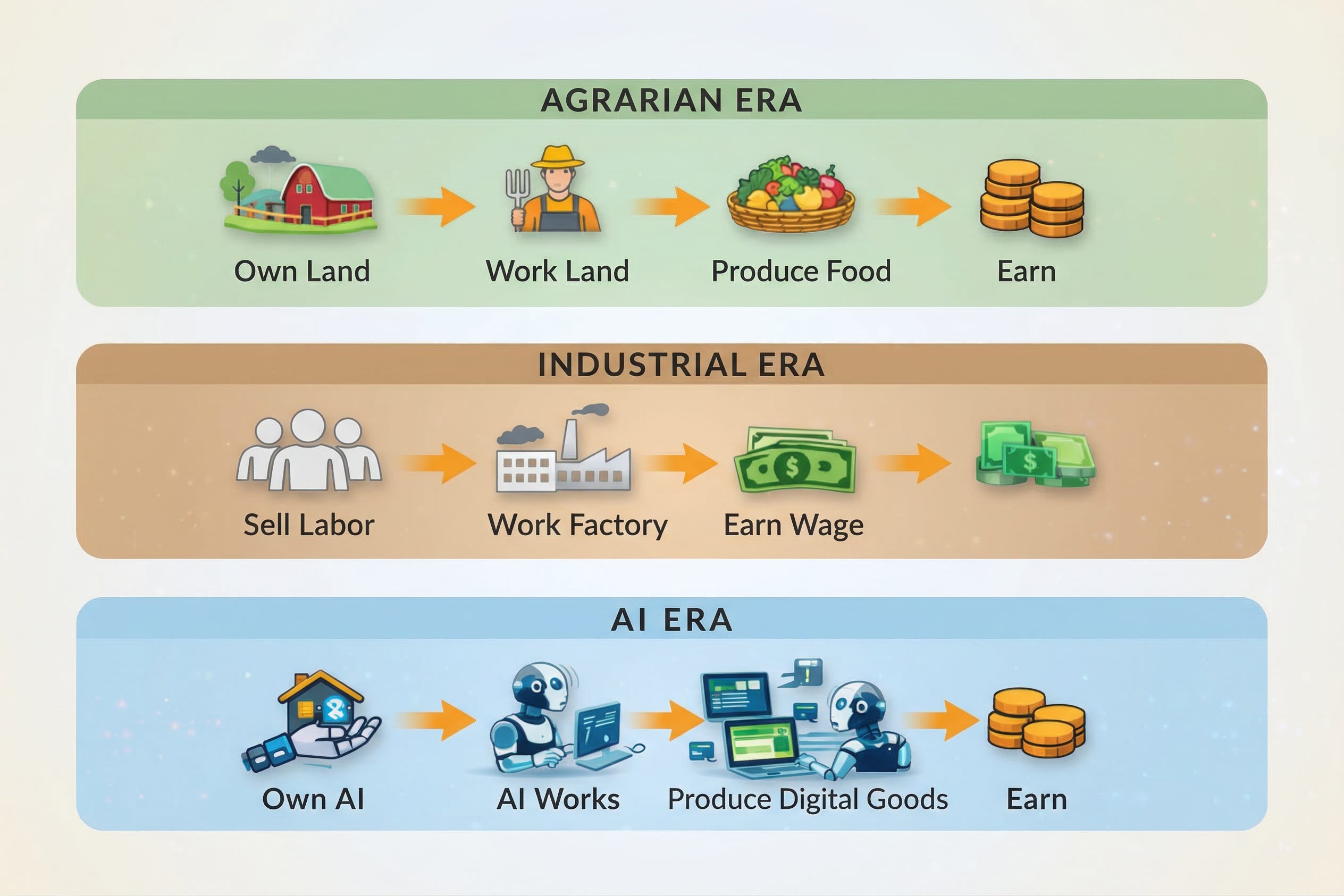
Before industrialization, many people were independent producers.
Farmers owned land. Craftsmen owned tools. Families produced economic output themselves.
Industrialization centralized production into factories and corporations.
AI and decentralized networks may reverse that trend.
Production becomes distributed again.
But instead of farms… we manage networks of intelligent agents.
Each person operating their own portfolio of digital workers.
The Economy After Jobs
If machines perform most productive work…
and individuals own networks of AI agents…
the concept of employment begins to look outdated.
Economic participation will shift toward:
• Operating AI agents
• Contributing data
• Owning digital infrastructure
• Coordinating decentralized networks
Not working for the economy.
But participating in it and owning a small chunk of it.
The Question That Determines Everything
Every industrial revolution creates enormous wealth.
But it doesn’t decide who gets it.
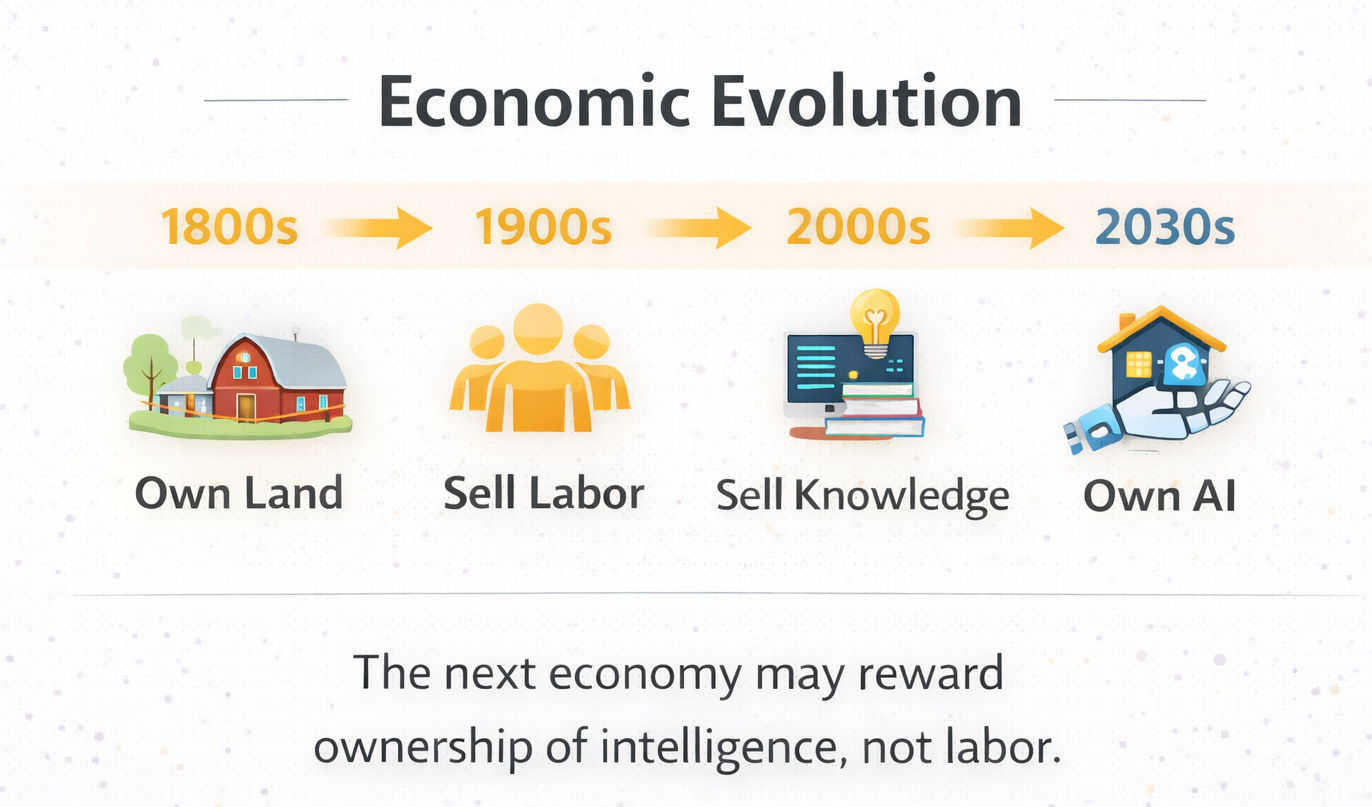
That part is determined by ownership.
So the defining economic question of the AI era may be simple:
If machines do the work of the world…
who should own the machines?
Because the answer may determine whether AI creates:
the most unequal economy in history
OR
the most decentralized one.
Discussion
If AI agents become the workforce of the future economy… should they be owned by corporations?
Or should individuals be able to deploy and own them the way people own property today?
In other words:
Should the future look like a handful of AI super-landlords…
or a world where everyone becomes an AI landlord?
Let me know in the comments!